
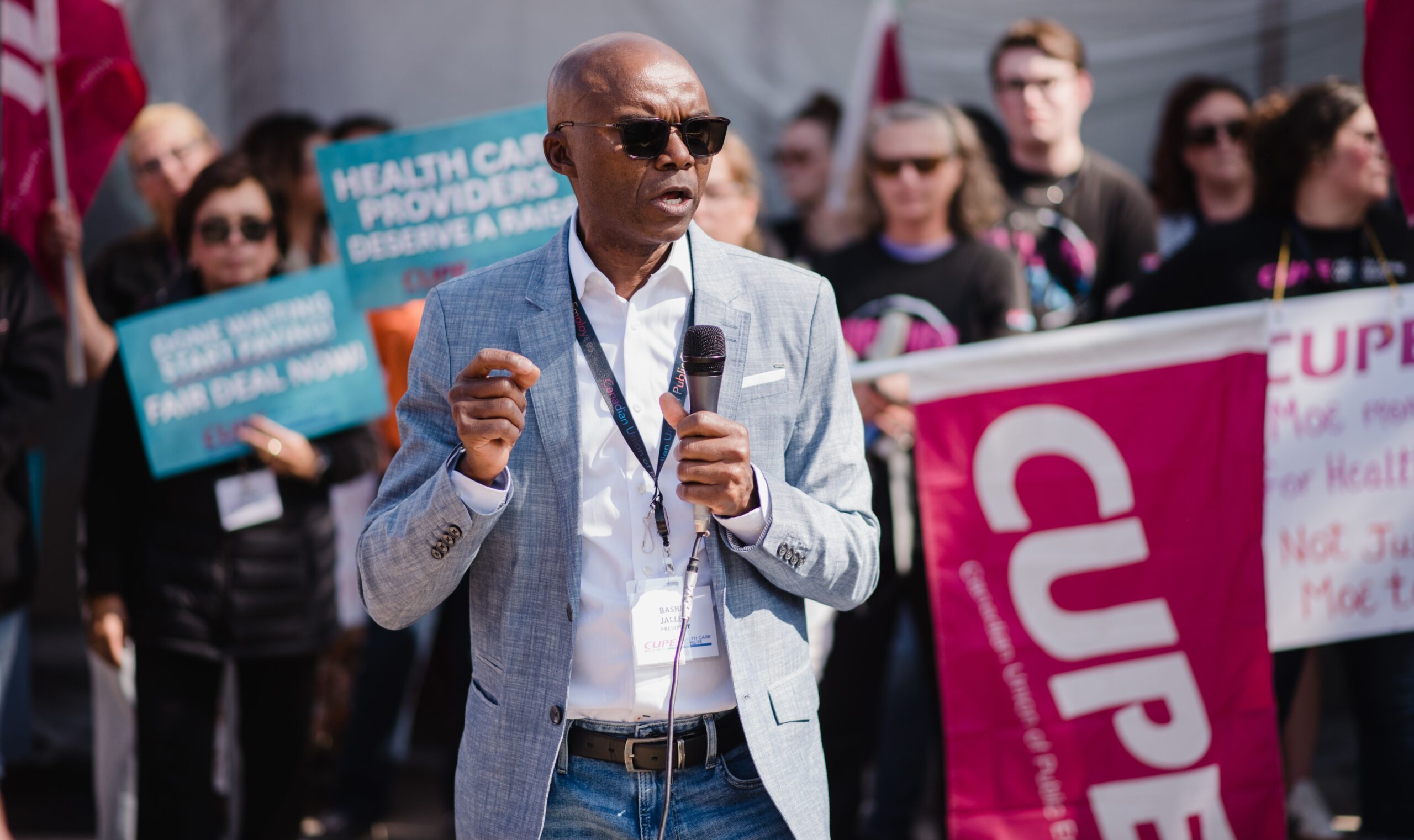
Saskatchewan’s frontline health care workers will hold a strike vote in September. Members of CUPE 5430, who work in hospitals, long-term care homes, community health facilities, laboratories, and other medical services across the province, continue to provide exceptional care despite increasing workloads, chronic short staffing, and years without meaningful wage improvements.
Members say they have continued bargaining in good faith with the goal of reaching a fair agreement that recognizes the value of the vital services they provide. However, after years of falling behind the rising cost of living, workers say meaningful progress at the bargaining table is essential.
“Our members don’t want conflict,” said Bashir Jalloh, President of CUPE 5430. “They want a health care system that attracts and keeps skilled professionals so Saskatchewan families can count on timely, quality care when they need it most.”
Without significant improvements, workers warn that the province risks accelerating an already serious recruitment and retention crisis.
“If the employer continues to ignore the realities facing frontline workers, our members will have to consider every option available to them to achieve a fair agreement,” Jalloh said. “No one wants job action. But people also cannot continue carrying a system that refuses to value their work.”
“Our members show up every day because they care deeply about the people of Saskatchewan,” said Jalloh. “They stay late. They pick up extra shifts. They do everything they can to ensure patients receive the care they deserve. But dedication alone cannot keep a health care system running.”
Low wages are making it increasingly difficult to recruit new workers and convince experienced staff to stay in Saskatchewan. Vacant positions force existing staff to work overtime, take on additional responsibilities, and care for more patients than ever before. The result is a system under constant strain.
“When health care workers leave because they cannot afford to stay, everyone feels the impact,” Jalloh said. “Patients wait longer for care. Families experience delays. Remaining staff become exhausted. This isn’t just a workers’ issue – it’s a public issue.”
CUPE 5430 says any future decisions regarding bargaining and potential job action will be made democratically by its members, with a strike vote being held in September.