






Earth Day 2025: Climate Emergency, Action for Ecosystem Restoration

April 22 is Earth Day – a day to recognize the climate change emergency and the action needed to restore our earth. With the world continuing to head for a catastrophic temperature rise and human caused destruction threatening the earth’s ecosystems needed to sustain life, Earth Day is an important time to renew our resolve to demand more urgent environmental action from governments, employers and within our communities in the transition to a zero-carbon economy.
Town of Esterhazy Refuses to Hear Concerns from CUPE 5428 Members
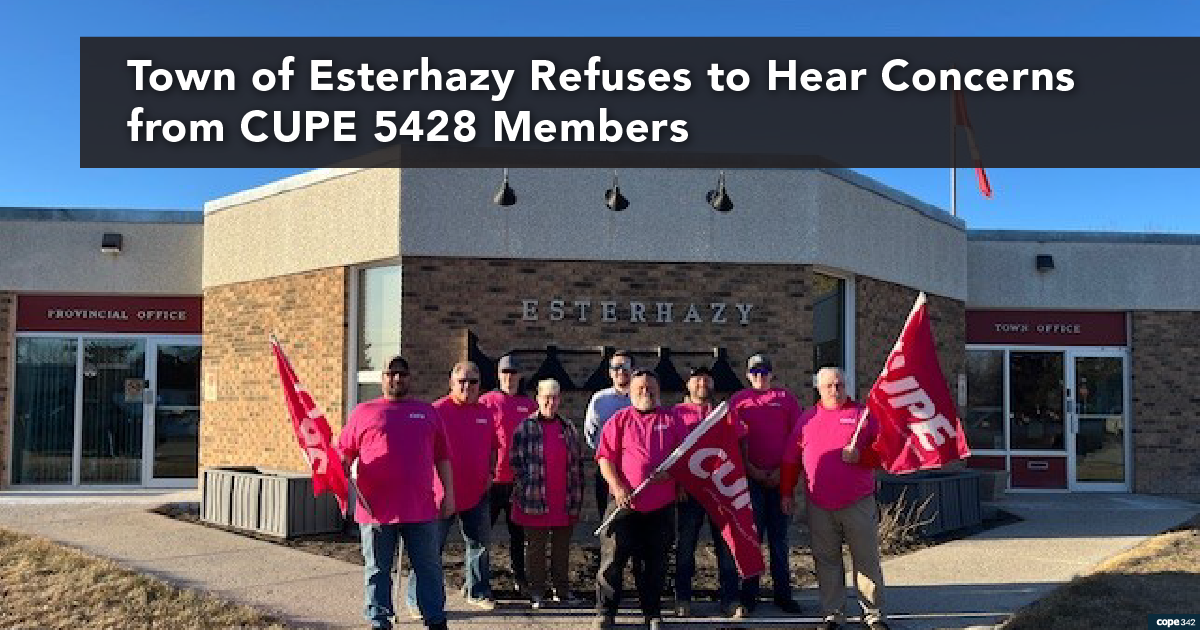
Members of CUPE 5428 are expressing frustration after the Town of Esterhazy refused to allow their concerns to be presented at a council meeting on April 10th.
CUPE Saskatchewan hosts first-ever Indigenous and Northern Activist Training in La Ronge

CUPE Saskatchewan held its first-ever Indigenous and Northern Activist Training in La Ronge last weekend, marking an important step toward reconciliation and strengthening the union’s presence in northern and Indigenous communities.
The Biggest Joke This April Fools’ Day? No Raises for Health Care Workers in Three Years
As people across the province share pranks and laughter for April Fools’ Day, CUPE health care workers are highlighting the biggest joke of all: they haven’t seen a wage increase in three years.
CUPE 5430 sounds the alarm on workload for Medical Technologists and Technicians
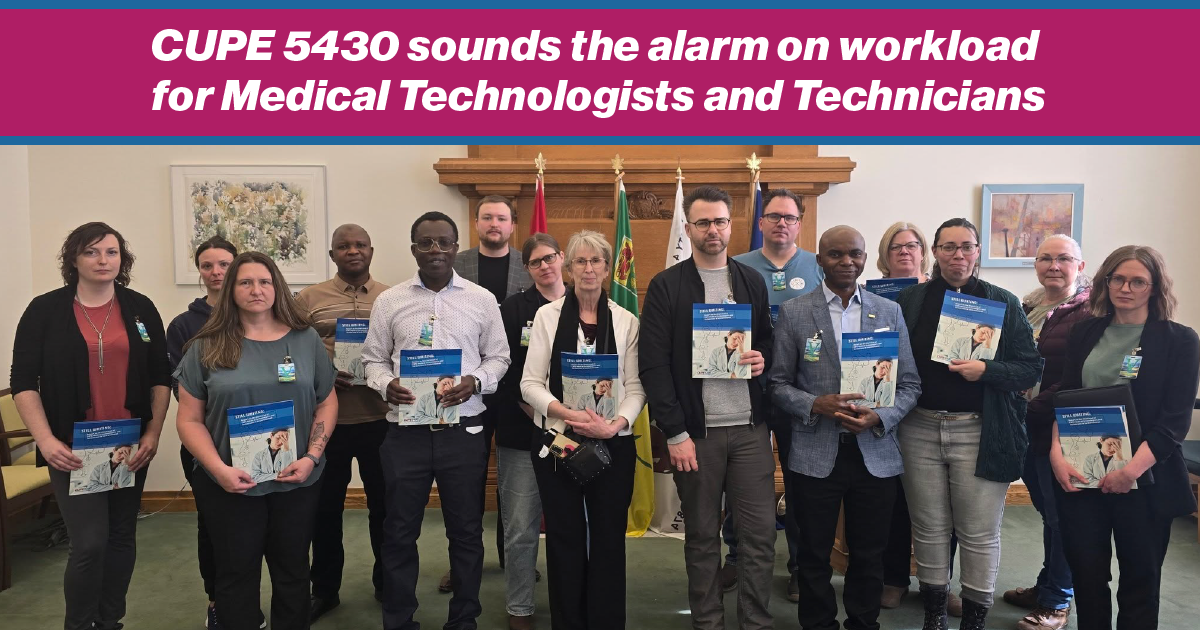
CUPE 5430 has released a new report highlighting the urgent and growing crisis facing medical technologists and technicians across Saskatchewan.
The report, entitled Still Waiting: Report on the Workload of CUPE Medical Technologists and Technicians in Saskatchewan, reveals that medical technologists and technicians are experiencing skyrocketing workloads, severe short staffing, and increasing risks to patient care.